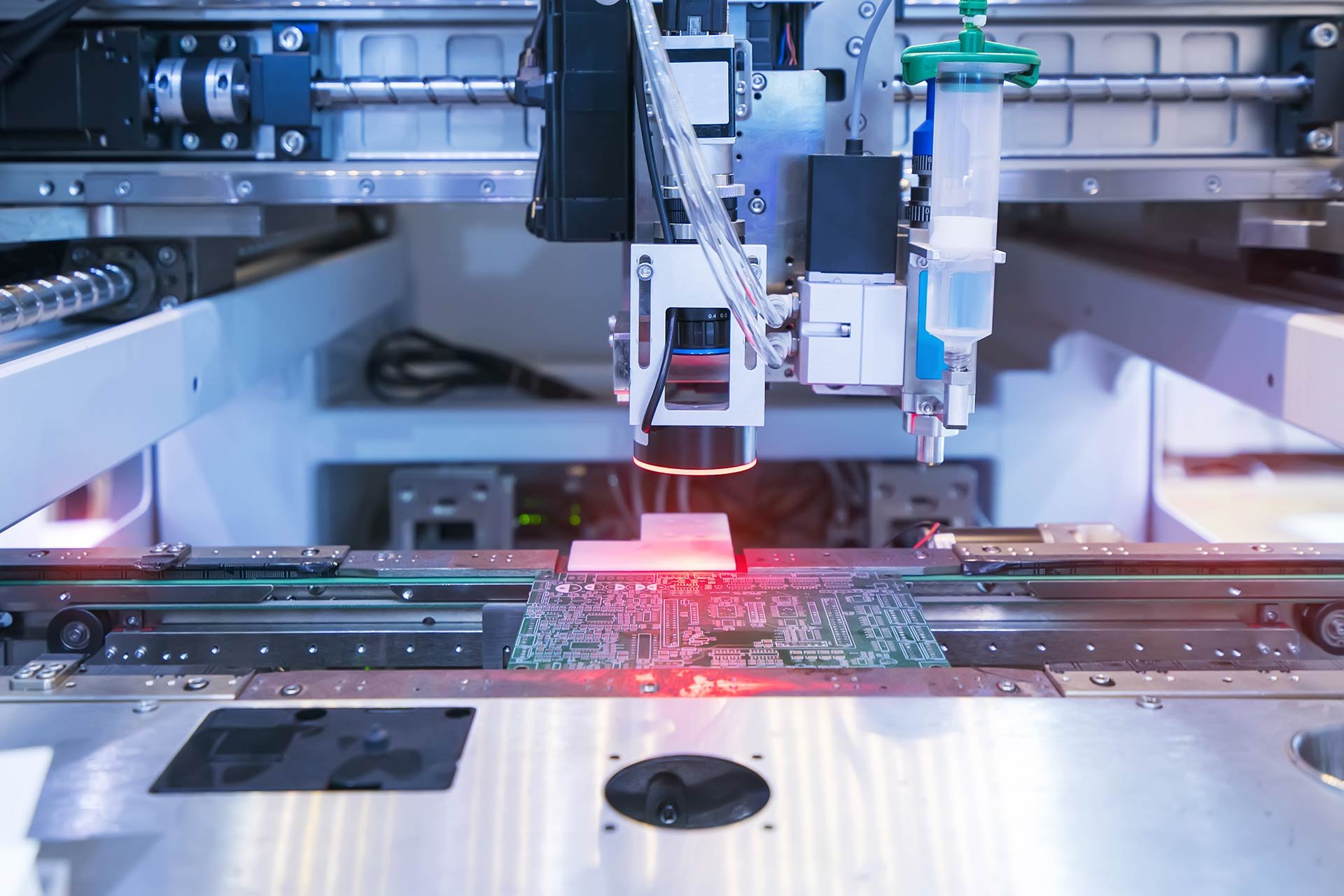
Machine vision systems are evolving at an explosive rate now that they are increasingly being combined with artificial intelligence algorithms. Machine learning and the significant development leaps have made artificial intelligence solutions more common in industry as well. Together, machine vision and artificial intelligence can be used in applications that would be too complex to program manually, or otherwise too complicated and cumbersome to maintain with traditional machine vision solutions.
In recent years, deep learning methods based on neural networks have been the subject of growing interest. Deep learning is one of the machine learning methods in which machines are able to learn from training data, i.e. through examples presented to it. A system that utilises deep learning can identify even unpredictable variables independently based on the data entered into it, without programming precise rules by hand.
The applications of traditional machine vision solutions and deep learning differ significantly
Traditional machine vision solutions provide real-time information about the production process and products, such as shapes, colours and surface structure. Machine vision methods can measure objects much more accurately than the human eye. However, traditional machine vision methods require clear rules – when programming the system, one must be able to determine which features can be measured or classified to distinguish parts. This kind of solution works reliably when it comes to regular parts without too much variation.
In practice, deep learning means that the system learns similarly to a person evaluating the parts at the production line.
Deep learning allows subjective qualification of objects, such as errors in the appearance or composition of a part. Also classification of individual parts and reading of markings on varying surfaces is easier with the help of deep learning, as the algorithm is able to learn the natural variations in the material. Such production steps have typically required human judgment, but by using examples of good as well as bad results with a deep learning algorithm, it can learn to recognise the differences independently. In practice, deep learning means that the system learns similarly to a person evaluating the parts at the production line.
In addition to machine vision, deep learning can be utilised in speech recognition, picking objects in robotics, and even forecasting stock prices. The more information a system receives in the form of images, speech, shapes or text, the more it learns and is able to make independent decisions.
Deep learning – how, why and when should you take advantage of it?
Deep learning methods are worth exploring when there are steps in the production process that cannot be successfully automated with the help of traditional machine vision solutions. Challenges may have been caused by, for example, significant variations in material, poor quality data, or objects that cannot be measured quantitatively. Such situations which were earlier considered too difficult to automate, can now be solved reliably, quickly and consistently by utilising a combination of machine vision and deep learning.
Deep learning speeds up the production process considerably as the amount of manual labour decreases. The evaluation of the parts takes only a fraction of a second, and under no circumstances can the human eye work as efficiently. Deep learning also makes identification much more accurate and uniform, as the possibility of human error no longer exists.
As a machine takes care of learning, the time required to program the system is also reduced. In this case, a machine vision system using deep learning system may even turn out to be a cheaper option than a traditional system, especially if the training material has been collected in advance.
More about this topic
Pinja provides machine vision solutions for even the most challenging conditions. We have the latest tools at our disposal, which enable even complex measurements. Read more about the use of deep learning and our machine vision solutions.
Read more
Guide: Using machine vision in the industry
4 tips for using Machine Vision in the Industry
Modern machine vision technology requires intelligence and adaptability