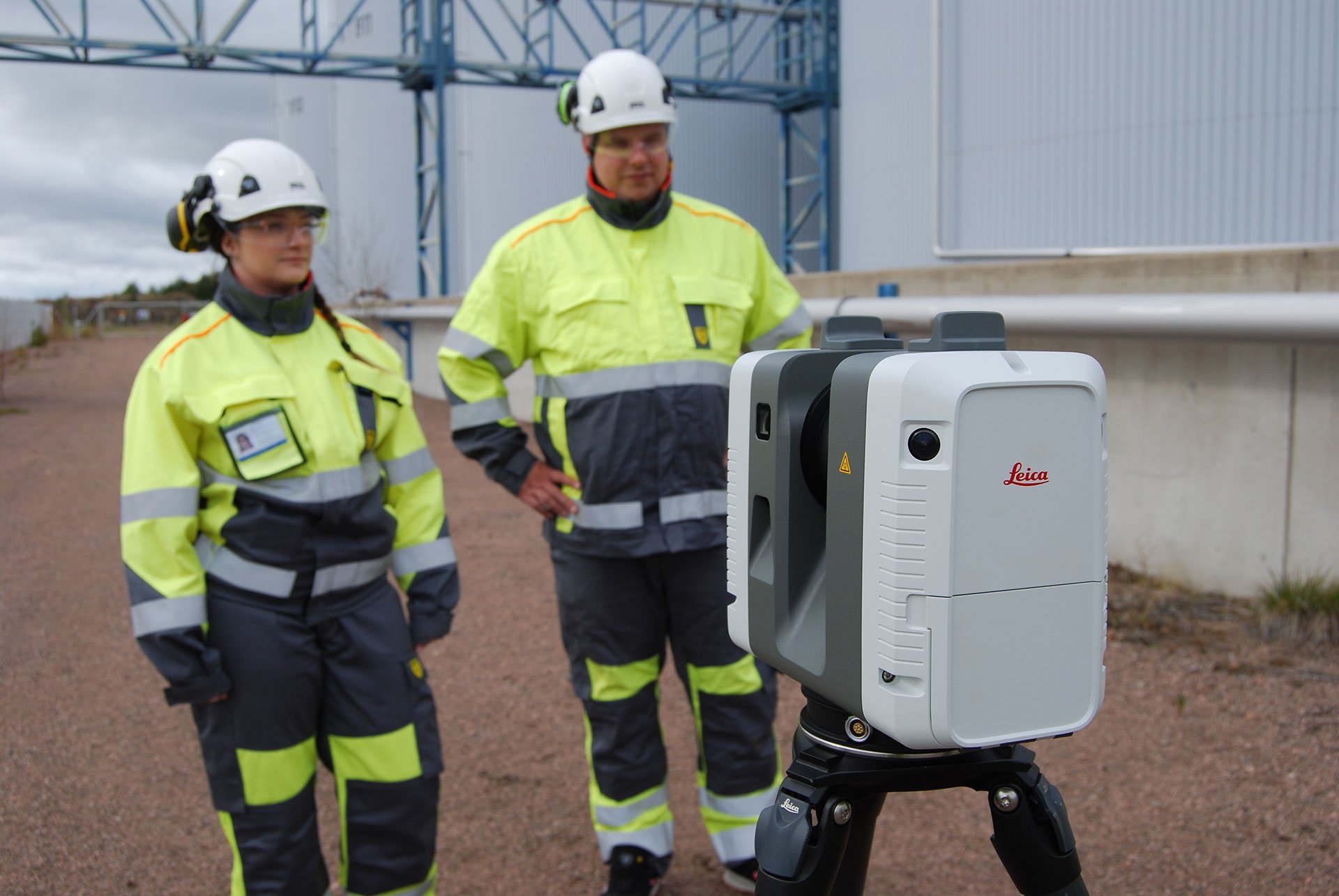
Laser scanning has become an industry standard particularly in modernization projects. An investment in a few hours’ laser scanning session definitely pays off because it is then possible to be certain that the initial data and documentation are in order. However, it is obvious that laser scanning is still far from being used to its full potential. Below, I have listed a few tips on how to utilize laser scanning in a profitable way in different stages of tank manufacture and lifecycle management.
Fast and accurate design with laser scanning
Before a tank is constructed, it is necessary to carefully define its purpose of use, environment and the requirements set by these to the tank. For example, for tanks used for storing hazardous chemicals, sufficient safety distances and spill containment basins must be determined and possible accident scenarios need be assessed. To do this, a 3D model offers a far more illustrative analysis.
Regarding tanks that are built in an existing mill environment, it is also necessary to pay great attention to geological conditions, structures, pipeworks, as well as logistics during the construction. Unfortunately, plans are often only based on two-dimensional outdated drawings or inaccurate measurements. This may bring challenges during the manufacturing and commissioning stage of the tank.
Laser scanning provides a millimeter-precision 3D model of the tank location environment or pipework of an old tank as well as other structures. The 3D model created by laser scanning is notably more useful than, for example, photographs taken of the area. The tank can be visualized in the environment, which gives an accurate and reliable plan.
Laser scanning brings reliability in the form of quality assurance and documentation
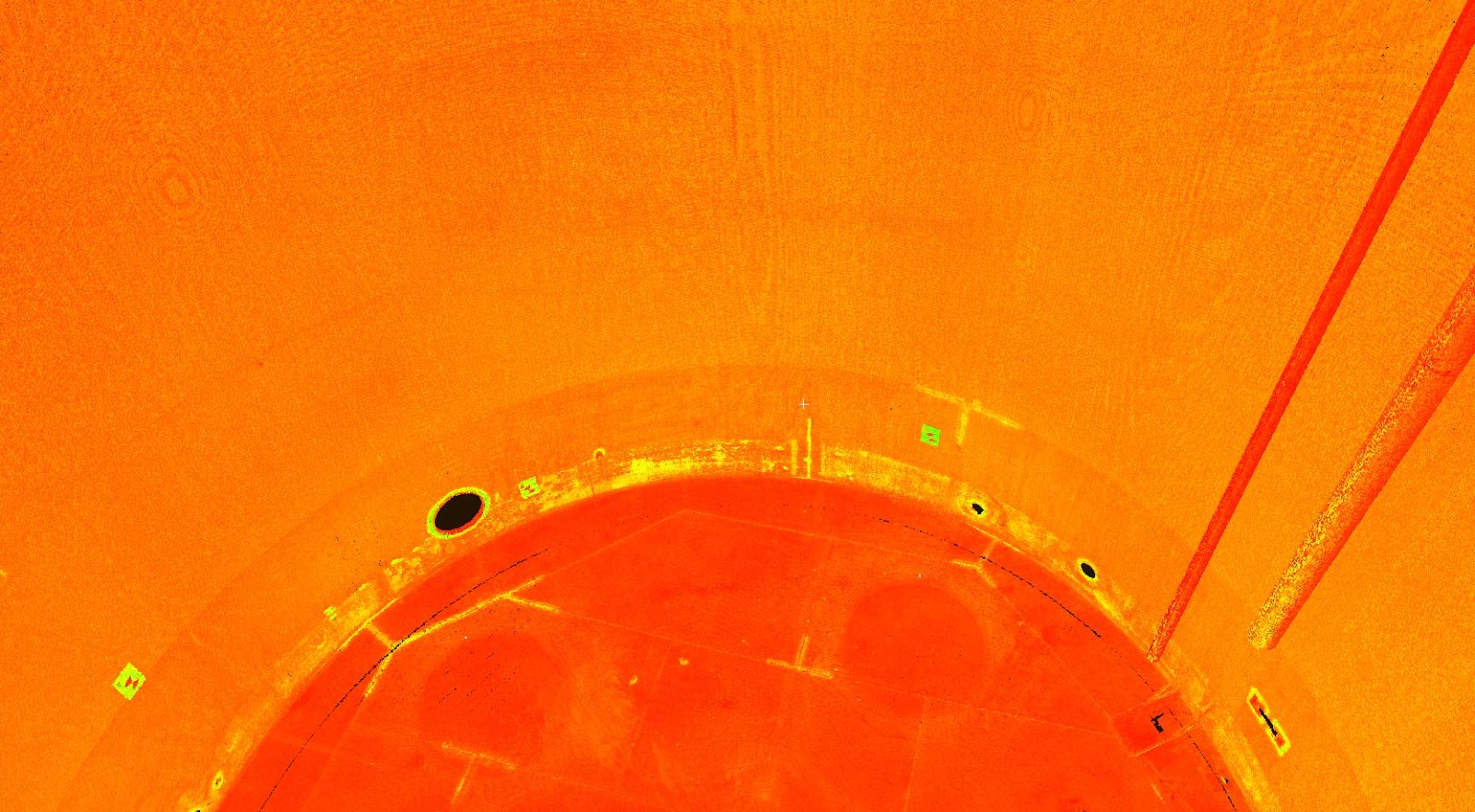
Laser scanning from inside a tank.
When the tank is ready, or already during its different manufacturing steps, a laser scanner enables comprehensive and detailed quality control. Thanks to laser scanning, deviations in the tank volume, roundness, straightness or location of welds and connections can be checked in an agile manner to ensure that the tank meets the required manufacturing standard. In addition, with the laser scanning technology, it is possible to precisely determine the tank volume and safety limits, which is required in commercial storage business, for example.
Laser scanning allows for quality control and work progress monitoring as well as accurate and comprehensive documentation throughout the project. In the best case, errors, such as inclinations or excessive settling of foundations, can be detected at an early stage when it is still possible to make corrections. Furthermore, comprehensive documentation is a safeguard for resolving potential conflicts even after the completion of the project.
Laser scanning helps tank lifecycle management
According to our experience, the documentation of many tank owners is from the time at which the tank was manufactured. Drawings and computation reports may not have been updated even after the construction and cannot in principle be relied on 100%.
Laser scanning enables accurate proactive monitoring of tank shapes, foundations or the environment. Combined with regular inspections using NDT (non-destructive) testing methods, laser scanning gives the tank owner good starting points for the tank's lifecycle management. Regular data documentation makes it possible to track changes and response promptly if something unexpected happens.
The point cloud model of a laser-scanned object also serves as the basis of design for future modifications. For example, if it is desired that the tank includes an internal floating roof (IFR) or to prevent product deposition by mixing, design is more agile thanks to a ready-made laser-scanned 3D model. On the whole, laser scanning accelerates the design work, improves the design quality and streamlines implementation and delivery.
Further information
Would you like to read more about laser scanning and its possibilities in the industry. Download the guide: Laser scanning in industrial engineering projects.
Read more
Laser scanning supports industrial renewal with millimeter accuracy
Guide: Project delivery models in industrial investments