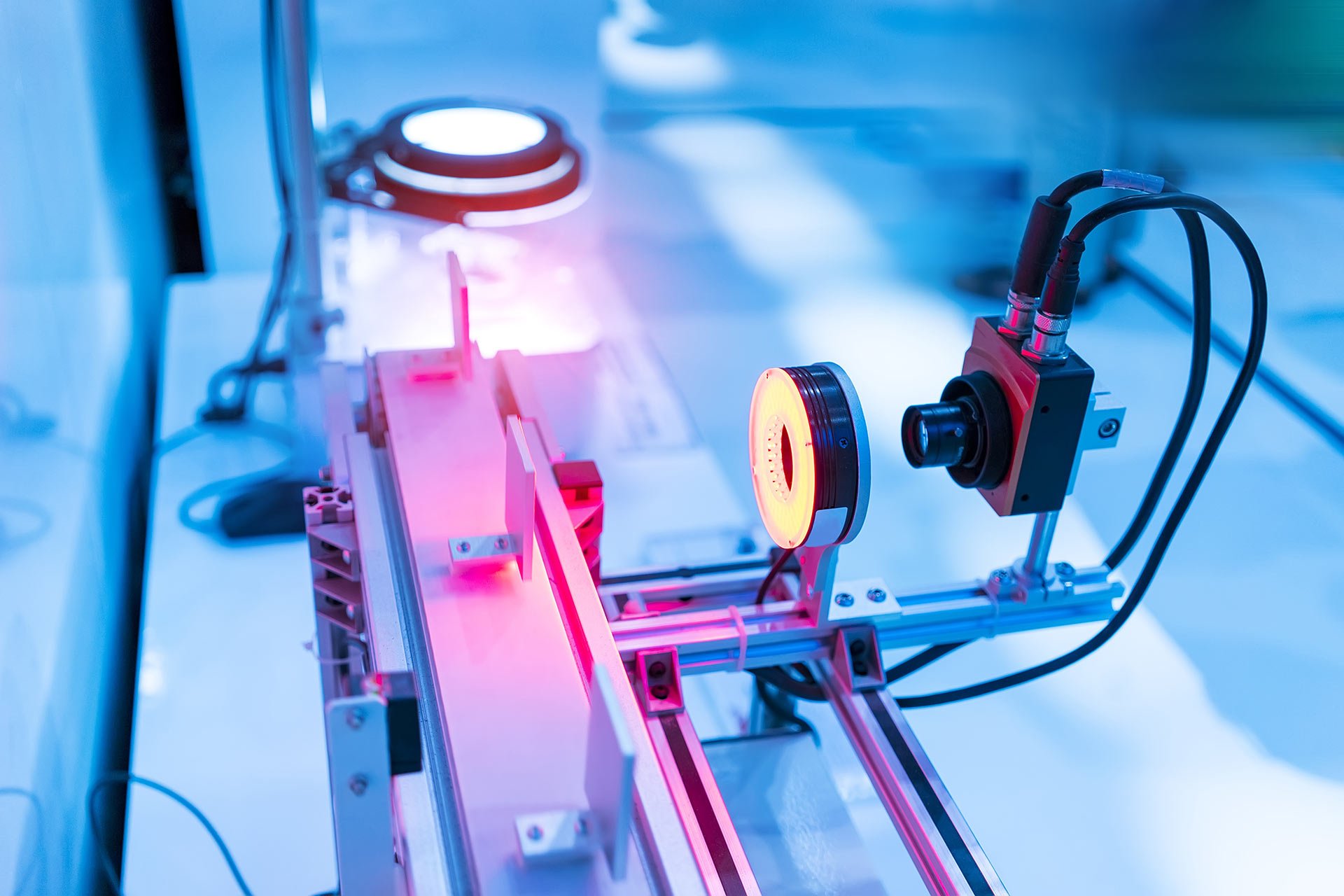
Machine vision solutions are one of the most rapidly emerging technologies in industry, and their popularity keeps on growing. Machine vision solutions developed for industrial uses not only improve the quality of production, but they can also be used to improve profitability, streamline operations, and solve various production challenges.
Acquiring a machine vision solution is however not all that simple, especially when it comes to budgeting. One must be able to take into account many different components from the point of view of solution design and commissioning, as well as from the perspective of investment value.
Using resources for a machine vision solution is always an investment that must be reviewed in the long term. When estimating the size of an investment, it is always good to also estimate the value of the benefits gained by that investment: what are we actually getting back from the investment that we are making into commissioning?
In many cases, a machine vision solution is acquired to solve a production challenge, to improve the quality and reliability of production, or to improve the efficiency of operations in some way. A machine vision solution can for example have a positive impact on the amount of wastage, the quality of production, and the streamlining or total elimination of manual work stages.
It is therefore possible to determine the value for an investment made into machine vision that is linked to operational efficiency or development as well, and the payback period of the chosen machine vision solution can be estimated on the basis of the gained benefits.
It is thus reasonable to look at an investment from many perspectives and to think about how to tie the investment back into the development of operations as well as possible. A good partner will help you to see the whole picture even before budgeting, suggests proposals and specifications, and, above all, sees the investment from the point of view of the entire business operation.
It is of critical importance that the procurement of a machine vision solution – just as any other technology and digitalisation project in industry – is seen as an investment into better and more efficient quality and production as well as longer client relationships rather than just as an expense.
Many Factors Affect the Costs of a Machine Vision Solution
When budgeting a machine vision solution, the basis is formed by a specification of requirements made in partnership with the solution provider and the client and by a careful procedure review and testing phase carried out by the machine vision partner. The initial specification of requirements will guide the choices that are made and the scope of the machine vision solution via a needs assessment.
A skilled partner will know how to look at the implementation from different perspectives and will suggest novel, more efficient, and better ways of doing things whenever necessary.
Without careful background work, it can be challenging to budget the machine vision solution, as there are plenty of applications and procedures. The production environment and conditions also affect the costs in many ways.
It is important to understand that the various wishes and requirements set for a machine vision solution will directly impact the scope of the system and the costs too. When choosing properties and functionalities, it is therefore important to always think about which properties are the ones that you are ready to invest in, and which can bring clear benefits or added value in terms of developing production capacities. A skilled partner will know how to look at the implementation from different perspectives and will suggest novel, more efficient, and better ways of doing things whenever necessary.